Software & Platforms
The Ideker Lab is involved in the development of bioinformatic resources for biomedical research, including the network analysis and visualization platform Cytoscape. Cytoscape is a resource for researchers analyzing molecular networks, with over 300,000 annual downloads. Its original publication (Shannon et al. Genome Research 2003) has received more than 50,000 citations, over half of which have accrued in the last five years, making it the most-cited work in Genome Research.
The Cytoscape ecosystem has been expanded with Cytoscape Web (Ono et al. Nucleic Acids Research 2025), a browser-based application that provides key visualization functionalities of the desktop software and integrates with web tools and databases. This web platform enhances accessibility and collaboration through online data sharing. It integrates with Cytoscape Desktop via the CX2 network exchange format and with the Network Data Exchange (NDEx) (Pratt et al. Cell Systems 2015) for storing and sharing networks. A new feature of Cytoscape Web is HiView, an extension implemented for the interactive exploration and analysis of hierarchical networks. HiView allows for the visualization of multiscale maps, such as the MuSIC (multiscale integrated cell) Map, enabling users to navigate from high-level systems down to the underlying protein-protein interactions.

Cytoscape is an open source bioinformatics software platform for visualizing molecular interaction networks and integrating these interactions with gene expression profiles and other state data.
Related Press:


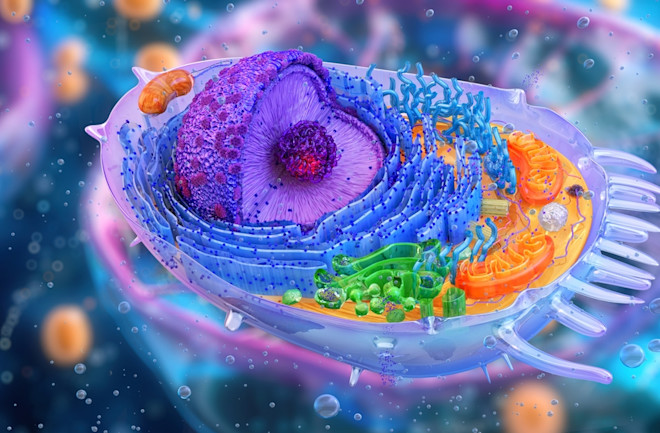
U2OS Cell Map
Mapping a human cell gives researchers a view of subcellular architecture and sheds light on how cancer develops. Learn more about the U2OS Cell Map here.
The Multi-Scale Integrated Cell (MuSIC) Map is a comprehensive map of eukaryotic cell architecture, constructed by systematically integrating diverse proteomic data. Using a robust computational framework, MuSIC combines data from tens of thousands of protein interactions and images to create a detailed hierarchy of cellular components and processes, accessible through NDEx.
Related papers:
Cell Mapping Toolkit
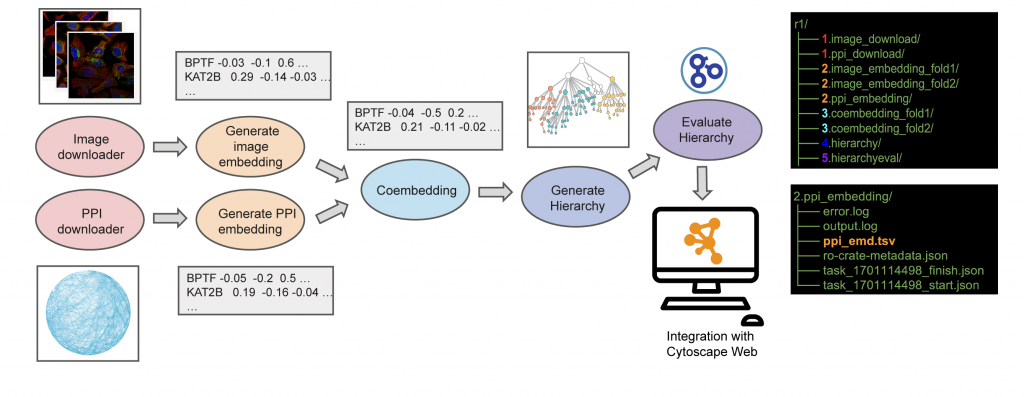
The Cell Mapping Toolkit is a comprehensive software pipeline designed to systematically integrate diverse protein datasets into unified, hierarchical maps of subcellular organization. Detailed methodology and results are described in our publication available here. It provides researchers an end-to-end workflow including data acquisition, modality-specific embeddings, data integration, hierarchy generation, and rigorous evaluation. The toolkit ensures reproducibility and transparency by automatically capturing rich metadata and provenance information at each processing step. It facilitates visualization of cell maps through Cytoscape Web and allows sharing of results via the Network Data Exchange (NDEx) platform. The Cell Mapping Toolkit is fully open-source and accessible, hosted on GitHub, with detailed documentation available at ReadTheDocs.
Related paper: Lenkiewicz, et al. Cell Mapping Toolkit: An end-to-end pipeline for mapping subcellular organization. Bioinformatics (2025)
Community Detection APplication and Service (CDAPS)
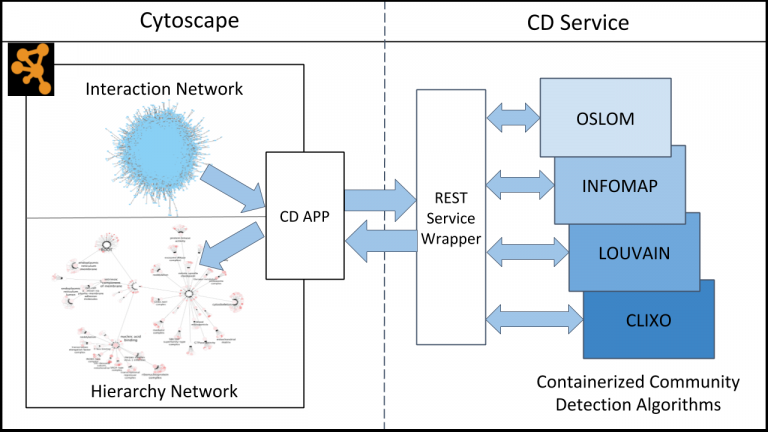
The Community Detection APplication and Service (CDAPS) framework performs multiscale community detection and functional enrichment for network analysis through a service-oriented architecture. These features are provided by integrating popular community detection algorithms and enrichment tools available via CyCommunityDetection, a Cytoscape application that acts as a client to a dedicated REST server. The server runs all the algorithms and tools remotely and can be launched locally. Its source code and documentation are available at Github.
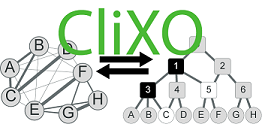
Clique Extracted Ontologies algorithm (CliXO)
The Clique Extracted Ontologies algorithm (CliXO) infers an ontology in the form of a hierarchical, directed acyclic graph (DAG) from pairwise similarity data. Originally developed for inferring gene ontologies from biological gene networks.
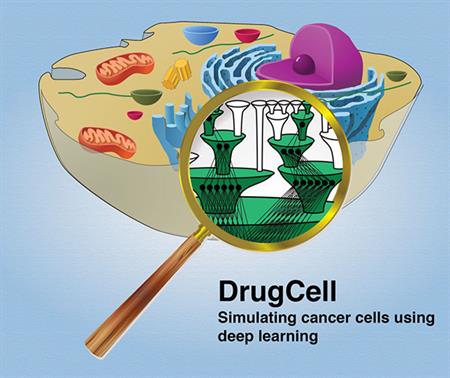
DrugCell
DrugCell is an interpretable deep learning model of human cancer cells trained on the responses of 1,235 tumor cell lines to 684 drugs. Analysis of DrugCell mechanisms leads directly to the design of synergistic drug combinations, which we validate systematically by combinatorial CRISPR, drug-drug screening in vitro, and patient-derived xenografts. DrugCell provides a blueprint for constructing interpretable models for predictive medicine. Source code is available via Github.
Related paper: Kuenzi, et al. Predicting Drug Response and Synergy Using a Deep Learning Model of Human Cancer Cells. Cancer Cell (2020) [PDF] [PubMed]
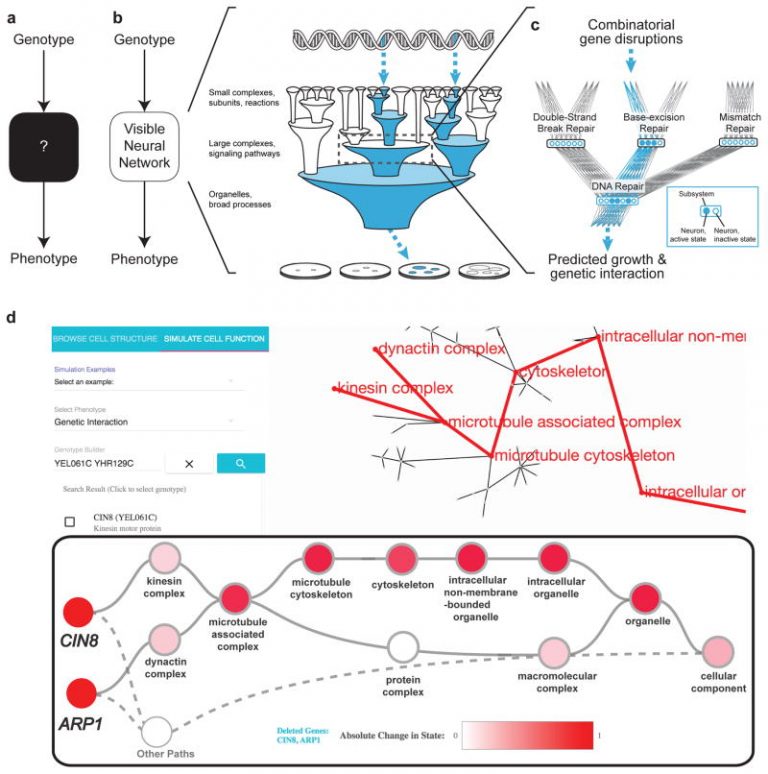
DCell
DCell is a VNN embedded in the hierarchical structure of 2,526 subsystems comprising a eukaryotic cell. Trained on several million genotypes, DCell simulates cellular growth nearly as accurately as laboratory observations. DCell provides a foundation for decoding the genetics of disease, drug resistance, and synthetic life. Source code is available via Github.
Related paper: Ma J, Yu MK, Fong S, Ono K, Sage E, Demchak B, Sharan R, Ideker T. Using deep learning to model the hierarchical structure and function of a cell. Nat Methods (2018) [PDF] [PubMed]
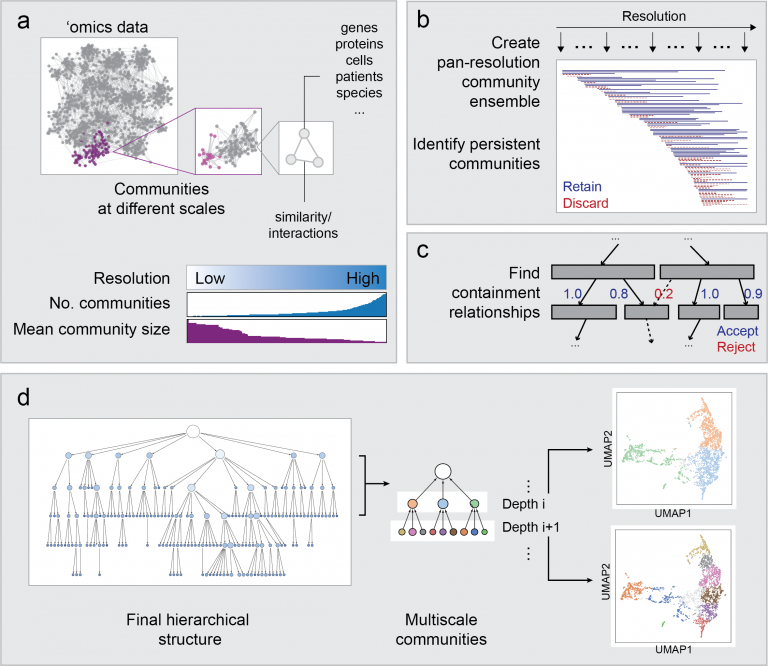
Hierarchical Community Decoding Framework (HiDeF)
In any ‘omics study, the scale of analysis can dramatically affect the outcome. For instance, when clustering single-cell transcriptomes, the analysis can be tuned to discover broad or specific cell types. Likewise, protein communities revealed from protein networks can vary widely in size depending on the method. HiDeF uses the concept of persistent homology, drawn from mathematical topology, to identify robust structures in data at all scales simultaneously. HiDeF is available via Python and Cytoscape.
Related paper: Zheng, F et al. HiDeF: identifying persistent structures in multiscale ‘omics data. Genome Biol. 2021 Jan 7. [PDF] [PubMed]
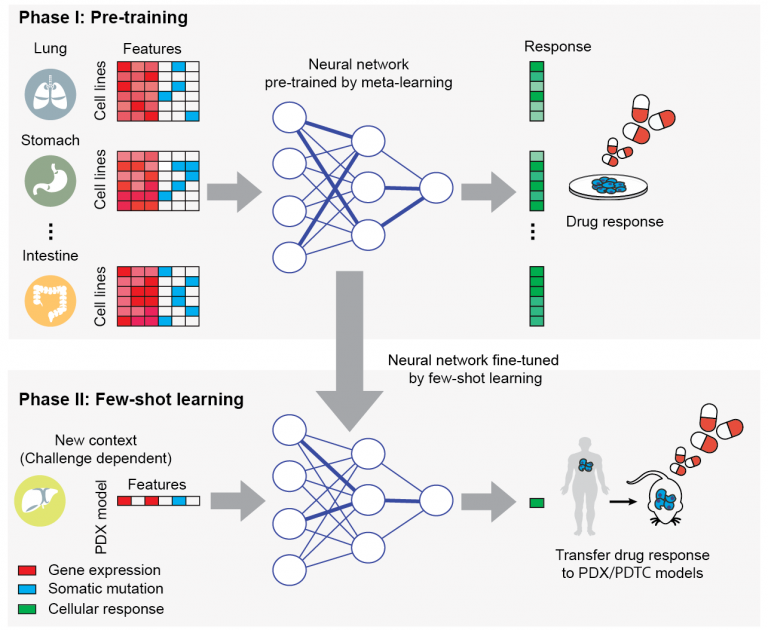
Translation of Cellular Response Prediction (TCRP)
We apply a recently developed technique, few-shot machine learning, to train a versatile neural network model in cell lines that can be tuned to new contexts using few additional samples. The few-shot learning framework provides a bridge from the many samples surveyed in high-throughput screens (n-of-many) to the distinctive contexts of individual patients (n-of-one).
Related paper: Ma, J. et al. Few-shot learning creates predictive models of drug response that translate from high-throughput screens to individual patients. Nat Cancer (2021). [PDF]
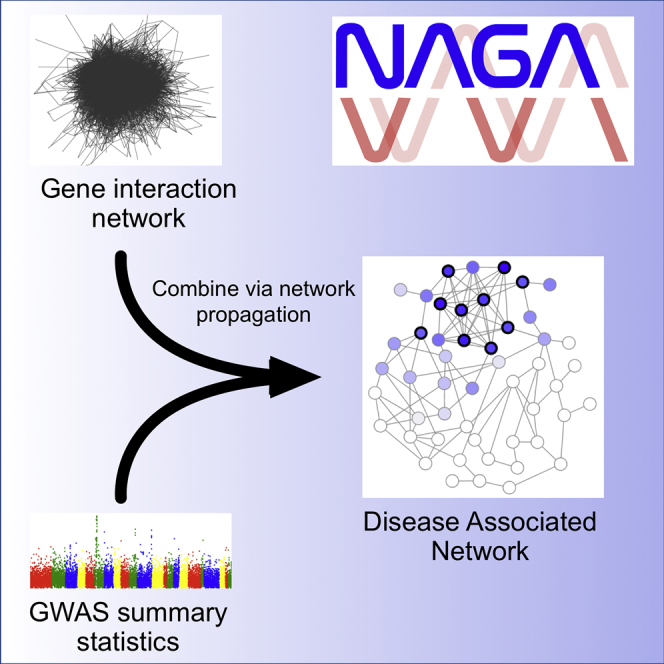
Network Assisted Genomic Analysis (NAGA)
NAGA is designed to use biological networks to analyze GWAS results. NAGA assigns each gene with an association score based on the given GWAS result. To integrate prior biological knowledge, NAGA downloads a molecular network from the NDEx database and performs network propagation, providing a set of new scores for each gene. The high scoring genes form a new subnetwork, which can be compared to a set of gold standard genes in order to evaluate the enrichment for previously discovered biology.
Related paper: Carlin D.E. et al. A Fast and Flexible Framework for Network-Assisted Genomic Association. iScience. 2019 [PDF][PubMed]
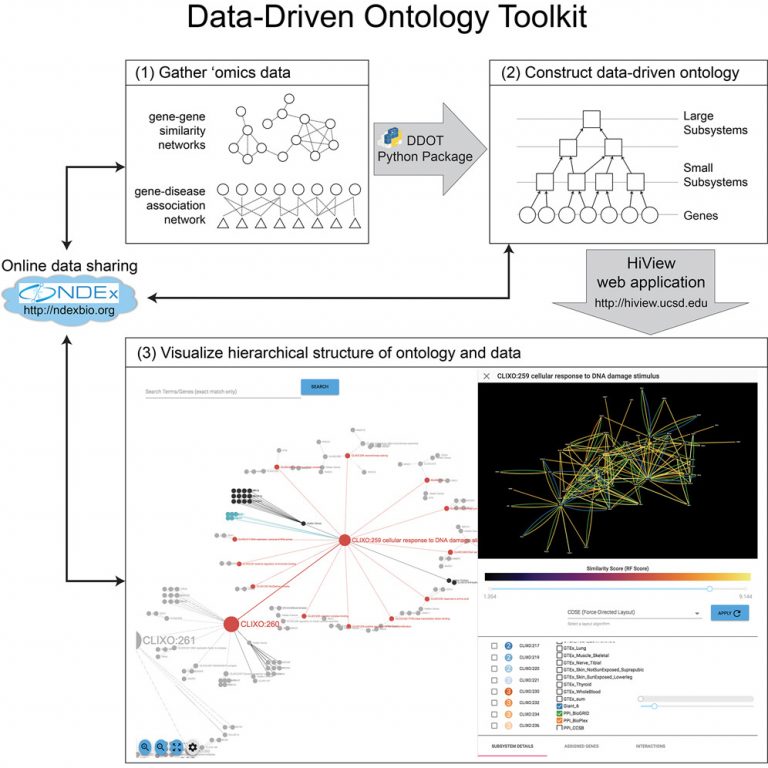
Data-Driven Ontology Toolkit (DDOT)
DDOT is a toolkit for constructing, analyzing, and visualizing data-driven ontologies. DDOT consists of a Python package to assemble and analyze ontologies and HiView, a web application, to visualize them.
Related paper: Yu M.K. et al. DDOT: A Swiss Army Knife for Investigating Data-Driven Biological Ontologies. Cell Syst. 2019 Mar 27. [PDF] [PubMed]
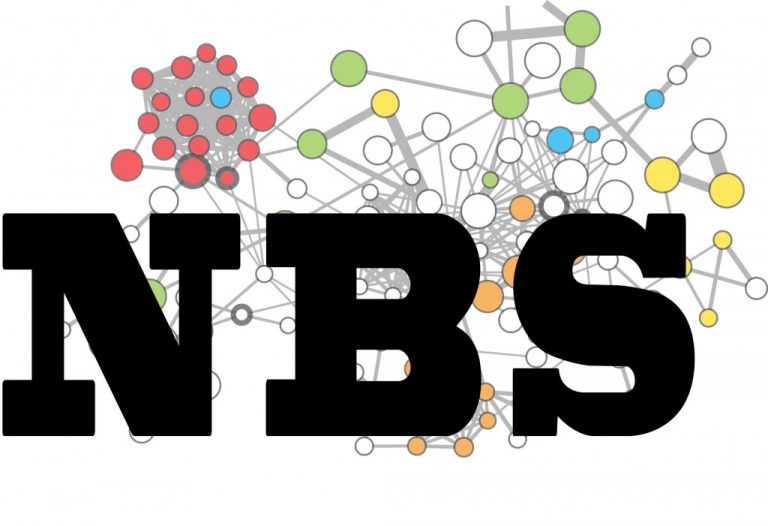
pyNBS (New code) | NBS (Old code)
Network based stratification (NBS), is a method for stratification (clustering) of patients in a cancer cohort based on genome scale somatic mutations measurements and a gene interaction network.
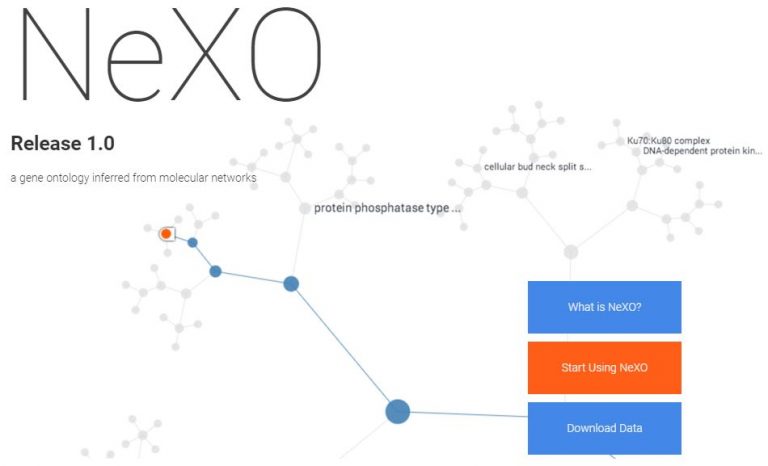
NeXO
The Network Extracted Ontology (NeXO) is a gene ontology inferred directly from large-scale molecular networks. NeXO uses a principled computational approach which integrates evidence from hundreds of thousands of individual gene and protein interactions to construct a complete hierarchy of cellular components and processes.
Legacy Software
Cell Circuit Search: Molecular interaction models provide us with a framework for integrating the large-scale data that we are now able to collect at multiple levels of biological information – genes, RNAs, proteins, and small molecules. Cell Circuit Search is a web-based interface for searching for genes that appear in our library of network models.
NetworkBLAST Software: NetworkBlast analyzes protein interaction networks in order to predict previously unknown relationships. It can compare multiple species’ protein interaction networks and infer interactions through homology. The program is best used in conjunction with Cytoscape to easily visualize the returned data.
PathBLAST Website: Pathway alignment and query against protein interaction databases to identify conserved protein interaction networks between species. PathBLAST searches the protein-protein interaction network of the target organism to extract all protein interaction pathways that align with a pathway query.
VERA and SAM: VERA and SAM was developed to address the need for a better statistical test for identifying differentially-expressed genes. VERA estimates the parameters of a statistical model that describes multiplicative and additive errors influencing an array experiment, using the method of maximum likelihood. SAM gives a value, lambda, for each gene on an array, which describes how likely it is that the gene is expressed differently between the two cell populations and was developed to address the need for a better statistical test for identifying differentially-expressed genes.
Dapple: Dapple is a program for quantitating spots on a two-color DNA microarray image. Given a pair of images from a comparative hybridization, Dapple finds the individual spots on the image, evaluates their qualities, and quantifies their total fluorescent intensities. Dapple is designed to work with microarrays on glass and is a program for quantitating spots on a two-color DNA microarray image.
enoLOGOS: Program enoLOGOS generates LOGOs of transcription factor DNA binding sites from various types of input matrices. It can utilize standard count matrices, probability matrices or matrices of “energy” values (i.e., log-frequencies).